
The Feed Is Infinite. Your Evening Is Not.
Listen to this article (experimental) · 23:31
Start with an unflattering number about the place you are standing. Before July, this blog had published two articles in three years. In July it published sixteen, each in six languages, each narrated in a clone of my voice, each with a cover drawn by a script. The marginal cost of one more essay here is an afternoon and some background GPU time, and I have documented exactly how rather than pretending otherwise.
So I am not writing about the flood as a bystander. I am a tributary. And the question that has been sitting with me is not the one makers usually ask, which is how to stand out in it. It is the reader's question. Websites, apps, plans, essays, books, and now images and video: all of it got easy. At some point the people on the receiving end stop caring. What do they care about then? What do they still consume? What do they still pay for?
I want to work that out properly, because I have spent a whole series on what stays scarce for the people making things, and almost nothing on the people those things are for. And the right frame is a forecast, not a verdict. Parts of this have already happened, parts are arithmetic, and parts are me extrapolating in public where you can hold me to it.
The arithmetic nobody can route around
Production now scales like software. Attention still scales like sleep.
Herbert Simon wrote the whole thing down in 1971, before any of the machines existed: "a wealth of information creates a poverty of attention." What information consumes is the attention of its recipients, so every cheap essay makes expensive minutes. The generators can double their output every quarter. Your evening is the same length it was in 1971, minus the part your phone already took.
I called scarcity a thing that changes address rather than a thing that ends. Here is the forwarding address, and it is not a data center. It is the hours between dinner and sleep, and the honest accounting refuses a fixed number: some evenings hold four hours and some hold none, and the budget does not even wait for dinner, because nobody works or studies at full attention for eight straight hours, and the feed knows the slack minutes inside a working day better than any employer does. That budget, multiplied by everyone alive, is the entire market every generated artifact is competing for, and it is the one input in the whole pipeline that cannot be generated. A model can make more video. No model can make more of your Tuesday.
Economists have a word for goods like this. A position is scarce by construction: not everyone can be first to a fishing mark, not everyone can be in the front row, and not everything can be the thing you attend to at nine in the evening. Attention is positional all the way down. Which means the abundance does not dilute its value. It concentrates it.
What saturation feels like from the receiving end
The supply side of this story gets told in launch posts. The demand side is quieter, and you already know it from the inside.
It is the moment a category stops registering. Stock photography crossed that line years ago: the smiling team around the laptop became visual silence, seen and not seen, wallpaper wearing a byline. Corporate blog posts crossed it. The enthusiastic beginner tutorial crossed it, and I can date that one precisely, because the first article on this blog is an enthusiastic beginner tutorial from 2023, and it reads today like a fossil from the last year that genre could still be written by hand at a profit. Hero images are crossing the line as I write this, and yes, I see the one at the top of this page.
Notice what actually happens in each case. The content does not get worse. It gets discounted. The reader's question quietly changes from "is this good?" to "did anyone mean this?", and any category where the answer is routinely no simply stops being read at all. The reports that measure such things have put non-human web traffic at roughly half the total for years. The feeds are already partly machines performing for machines, and ordinary readers have responded the way anyone responds to a market flooded with counterfeit signals: they stop accepting the currency.
That is what "people stop caring" means, mechanically. Not fatigue. Repricing. Attention withdraws from every surface that generation has made cheap and pools around whatever still proves a person was there.
The middle dies first
Two of my own precedents seem to disagree with each other, and the disagreement is where the useful prediction lives.
Machine translation gutted professional translation, not because the machine was better but because most clients settled for cheaper, faster, worse. Meanwhile wild-caught fish, plainly outproduced by farms, became the premium instead of the casualty. Cheap-and-worse wins one market; the handmade original wins the other. Both are true, so neither is the rule.
The rule is that markets under generative pressure do not sink uniformly. They split. There is a floor, where the buyer cannot feel the difference and nobody needs to answer for the result: menu translations, background music, the website for a plumber. Generation takes the floor completely, and it should. There is a top, where the buyer can feel the difference or somebody must be accountable when it fails: the novel your friends are arguing about, the contract with a name on it, the fish that tastes of where it came from. The top reprices upward, the way the wild catch did.
And there is a middle: competent, anonymous, interchangeable work, better than the floor and cheaper than the top. Professional but not personal. That is the band that dies, because it was priced on a difference the buyer can no longer detect and backed by nobody the buyer can call. The session musician playing on advertising jingles, the stock photographer, the agency blog writer, the template web shop: all middle, all repricing toward zero. If your work is good but nobody could say whose it is, the flood is coming for exactly you.
Where a thing lands on that split is decided by two questions, and only two, as far as I can tell. Can the buyer feel the difference? And does someone need to carry the cost of being wrong? No to both puts it on the floor. Yes to either keeps it above water.
Will people just generate their own?
This is the sharpest version of the question, because for one whole class of consumption the answer is already yes, and I predicted it without noticing. That 2023 fossil of mine was titled "Imagine a World Where Books Answer Your Questions." The world arrived. Almost nobody reads a reference book front to back anymore; they interrogate it. Utility consumption, consumption where you want the answer, the tool, the plan, the website, collapses into generation. You do not browse for software that almost fits. You describe what you need and it gets built, and an agent pipeline can turn one sentence into a plan and a draft pull request while you make coffee. For anything whose value is what it does, generation is not a substitute for consumption. It is its final form.
That collapse has an edge, and licences draw it rather than capability. A model interrogates only what it was allowed to read: the books nobody digitised, the archive a rights holder keeps shut, the film catalogue no one may train on. The edge does not move as the models get better. It moves when somebody licenses the material with consent and provenance attached and the owner is paid for it, which is exactly what the guild I wrote about earlier this week exists to do. Until then, the answers you interrogate out of a model are bounded by what it had permission to know, and the best of a subject is often still sitting behind a rights desk.
But run the same logic on the other class and it breaks in an instructive place. A model can write you a novel tuned to your taste tonight: your themes, your pacing, an ending calibrated to move you. It will be, in some testable sense, a better fit than anything on the shelf. And it will still be missing the one property that makes most cultural consumption worth the evening, which is that somebody else has read it too.
We do not only consume stories. We consume them together, staggered by a few weeks at most, so that there is something to say at dinner, a reference that lands, a crowd to belong to. A book club cannot meet over eight bespoke novels. Culture is a coordination game, and a perfectly personalised artifact is a room with one chair. The machine can generate a better episode than the one everyone watched. It cannot generate the fact that everyone watched it. That fact is the product, and it is positional, and positional goods are the one shelf the infinite factory cannot stock.
So the split on "will they just generate": consumption that needs no witnesses collapses into generation, and consumption that is witnessing does not. The background playlist, the workout plan, the bedtime story for a four-year-old who wants herself as the hero: generated, already, and fine. The film you plan a Friday around, the album that marks the year, the book that a million strangers also carried through the same month: those survive precisely because their value never lived inside the file.
Where the attention pools
If attention withdraws from cheap surfaces, it has to land somewhere. Watching where it lands is the most useful thing I did all month, because the data is already public and I have been collecting it.
It lands on the making. Eleven hundred people gathered around a hand-computed checksum that a library has done correctly since 1995. A shop-window potter outsells the factory shelf beside her. The demonstration of skill, live, with the wrong turns kept in, is nearly the only content class whose audience the machines have not absorbed, and it reprices everything around it.
It lands on stakes. The same site that pays eleven hundred visits to a handmade checksum voted a tool-support question to minus eight and a judgment question to plus thirteen in the same weeks. The difference was not quality. The dead question could be answered by anything; the living one could only be answered by someone who had shipped the mistake and paid for it. Testimony holds attention because it cannot be generated, only earned, and readers have become startlingly good at smelling the difference.
It lands on the unrepeatable. A match being played right now is the one broadcast no generator can pre-empt, because its entire value is that nobody, human or machine, knows the ending yet. Live sport, live music, the launch watched together, the stream where it can still go wrong: scarcity by construction, immune to the flood by definition. I would not be surprised if the era of infinite recorded content turns out to be a golden age for the unrecorded kind.
And it lands on persons. Not faces, persons: entities with a name, a history you have followed, and something to lose. Attention to a person compounds like a relationship rather than resetting like a feed, five years of reading someone cannot be generated retroactively, and a person can be wrong in public and pay for it, which is exactly what makes their next claim worth hearing. The parasocial economy gets called a pathology, and parts of it are. It is also the market's crude first answer to the provenance problem: when you cannot verify the artifact, you attach to the author.
What they will pay for
Money follows the attention with a lag, and it buys the things the flood cannot mint.
It buys recourse, which I have argued already and will not re-argue: a name on the contract, a person who loses something if it fails.
It buys curation, and I think this is the biggest reopened profession of the decade. When anyone can make anything, the scarce labour is choosing, and choice is exactly what the reader's finite evening cannot afford to do across an infinite menu. The feed already curates, but the feed works for the platform. What returns is the editor who works for you: the newsletter that reads three hundred things so you read four, the label that signs ten acts a year, the friend whose recommendations land, the critic whose taste you have calibrated against your own over a decade. Taste, held by a person, accountable over time, priced. The nineteenth century called that an editor and the twentieth called it an A&R department, and we are about to call it whatever the subscription is named.
One market is already there, and it pays. Traders subscribe to curated news terminals like Tree of Alpha, which watch the wire, the filings and the exchange announcements and push the handful that move a price, in the second they appear. The subscription is not buying information, which is free and infinite and arriving faster than anyone can read it. It is buying the filter, and the milliseconds. And the buyer at the other end is often not a person at all but the trader's own automation, which is where this meets the rail the robots will pay on: when everything is generated, what gets paid for is the judgment about what matters, and machines are buyers of that judgment too.
It buys the label that a person did this. Wild-caught, again. The premium attaches not to the pixels but to the provenance, which is why the provenance will be faked hardest, and why the arms race moves there next. Staged worklogs, synthetic build-in-public, deepfaked demonstrations: all coming, most already here. What authenticates the authentication is the old, expensive stuff that predates the internet: physical presence, longitudinal consistency, a reputation that took years and can be destroyed in one afternoon, and third parties with their own names at stake. Trust caught fake reprices to zero and stays there. That sentence was true of the potter and it will be true of everyone.
And it buys access: the front row, the workshop, the office hours, the apprenticeship, the conversation. Positional, rival, unfakeable. The cheapest thing in the world to generate is a lecture. The one thing that cannot be generated is being the person the master actually answers.
One split I want to name before it becomes obvious, because it is not quite here yet: who pays and who attends are coming apart. The highest bidder for a demonstration of skilled work may soon be a machine with a training budget rather than any human watcher, and the crowd at the potter's window is already growing its second row. When that settles, a maker will face two markets with different currencies: human attention, paid in evenings, and machine attention, paid in money. Pricing those separately, instead of giving the second one away inside the first, might be the most consequential commercial decision of the next decade for anyone who works with their hands or their voice.
The same budget runs your working day
I framed the bottleneck as the evening, and the evening undersells it. The eight hours before it run on the same currency, and the flood arrived there first: generated reports, generated decks, generated code, generated summaries of meetings that could themselves have been generated. At work you do not get the option of not caring. You get to choose what to care about, hour by hour, under pressure, and the choosing compounds in a way the evening's choices never did.
Because here is what a career actually is, once output stops being scarce: an attention history. The developer who reads the diff instead of scanning it is training something the scan never trains. The one who sits with a wall for twenty minutes before asking the machine is buying understanding at the only counter still selling it. Depth stopped happening to people when the machine took over the reps; now it is a spending decision, made daily, mostly invisibly, and after a few years the sum of those decisions is simply what you are. The roles follow. Nobody hands the incident call to the person who skimmed for five years, and everyone knows who actually read the code without quite being able to say how they know.
Which makes the CV a strange document now. It lists outputs, and outputs are exactly what stopped being evidence. What an employer is actually trying to buy is where you pointed your attention for the last ten years, because that, and not the artifacts, is the one part of the record the machines could not have produced for you.
The forecast for an ordinary week
Run the same argument down to the scale of one household and it lands somewhere older than any of this technology.
If attention is the scarce good, the most valuable thing you can give another person is an undivided block of it, and the market has started saying so out loud. Run clubs became the social scene of half the big cities in Europe. Board-game cafés keep opening. People who can afford any phone are buying deliberately stupid ones. Supper clubs, digital sabbaths, book circles that meet in person: every one of them is the same product wearing a different jacket, a fence around a block of shared attention. I expect that category to be one of the quiet booms of the next decade, precisely because it sells the only thing the generators cannot mint.
A picnic on the beach with your wife is, in the strict terms this essay has been using, unrepeatable, positional, perfectly provenanced, and witnessed by the only audience that matters. I have run that experiment more than once. It outperforms.
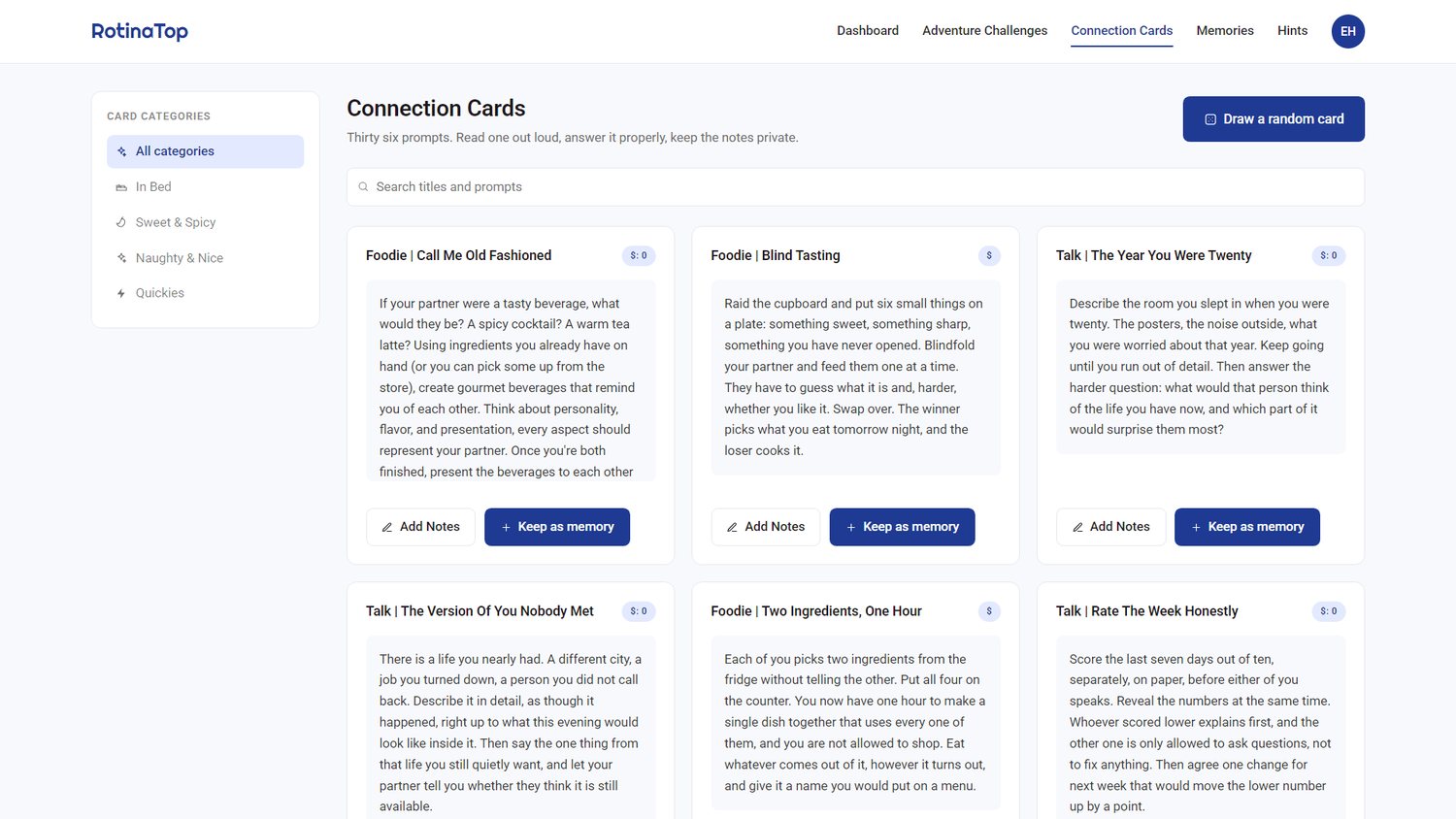
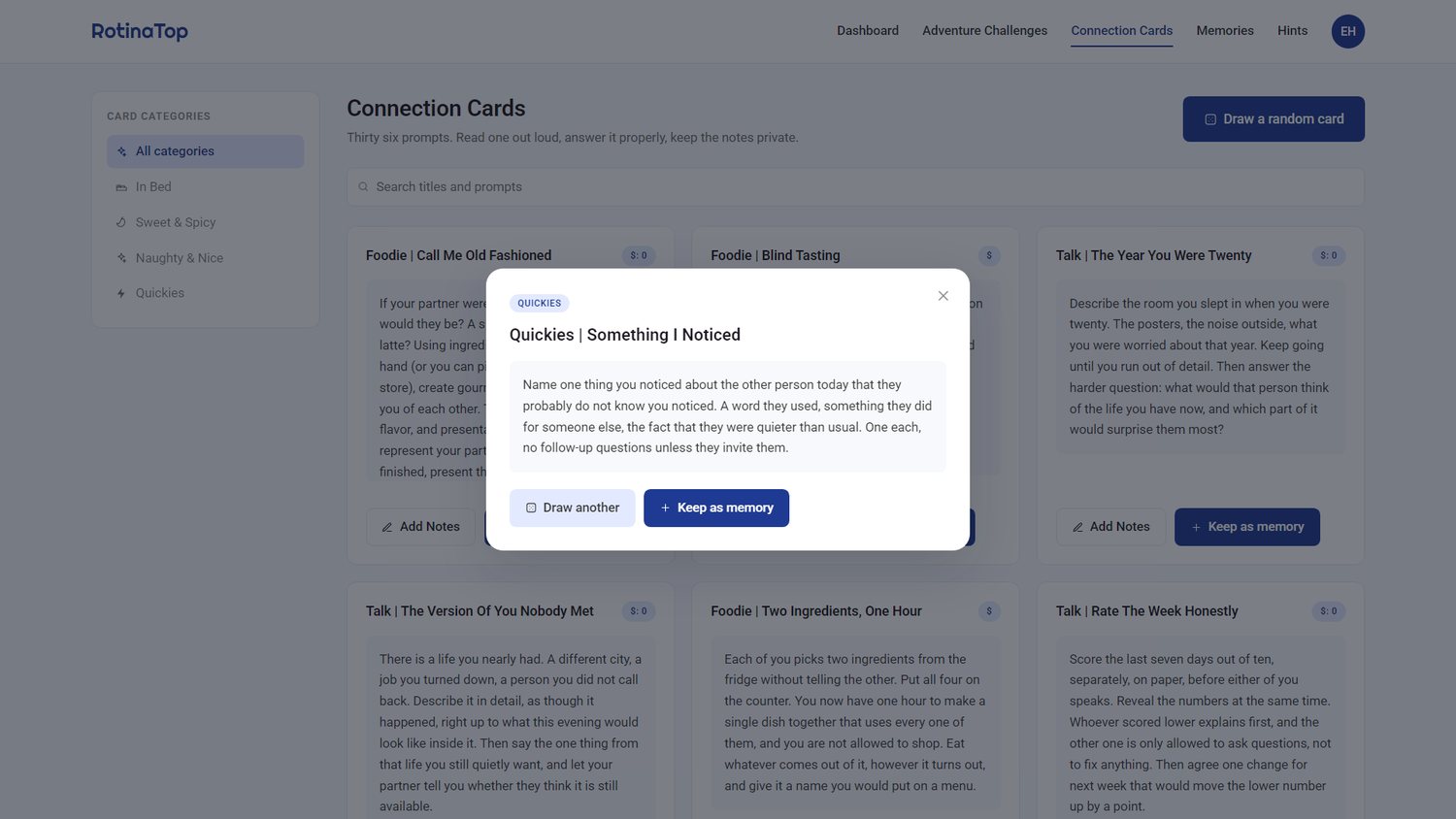
And there is a builder's lane here, which I know because I am standing in it. Tools that help a couple or a family structure the shared block: the routine, the challenge you run together, the scoreboard that closes the week. I built one this week, RotinaTop, for exactly this, and the category has company already, which is the point rather than a problem: a market forming around protected attention is the demand side voting exactly the way this essay predicts. None of these tools is meant to be followed religiously, mine included. They are scaffolding. And the test for every product in the category is the same one: does it end with two people looking at each other, or looking at it.

The part I hold with open hands
I said this would be a forecast made in public, so let me say plainly which parts I am least sure of.
I do not know how much of the middle survives on inertia and procurement habit; institutions buy anonymous competence long after individuals stop. I do not know whether the coordination argument protects big culture or only concentrates it further, five global franchises and a desert, which would be survival of a kind I would not celebrate. And I do not know how the generated-companionship market bends any of this, because a synthetic person who remembers your week is a witness of a sort, and I can feel that case resisting my own categories.
But the core of it I would put money on, because it is arithmetic rather than taste. Making has stopped being the bottleneck, so making will stop being the business. The businesses that remain are the ones parked on what did not scale: the evening, the difference a buyer can feel, the person who answers for the work, the crowd that showed up at the same time, the seat at the front.
The part I do not hold with open hands comes from somewhere older, and I will offer it rather than argue it, as this series has done before.
Watch anyone watch a film. Ten minutes in, they know whether the hero is doing something good or something bad, whether he is being true to what he is for, and they know it without consulting a rulebook, because a story carries its destination inside it and every scene gets weighed against where the whole thing is going. A life orders its attention the same way. You cannot rank what deserves your evening until you know what your evenings are for, and that is a question about where you are going, which is exactly the question the feed is engineered to keep you too entertained to ask. The tradition I stand in answers it plainly: we were made to love God and to love one another, and everything else either lines up behind those two or gets in their way.
Read that way, the coordination argument from the middle of this essay stops being a quirk of media economics. People caring what other people watched, wanting to have seen it too, wanting to talk about it afterwards: that is not herd behaviour. That is what creatures built for communion do with abundance. The reason a generated novel for an audience of one feels like a room with one chair is that we were never meant to consume alone in the first place.
Augustine wrote that his love was his weight: wherever he was carried, it was love that carried him. Simone Weil called attention the rarest and purest form of generosity. And the Gospel line everyone knows, where your treasure is, there your heart will be also, stopped being a metaphor the day attention became the treasure. Where your attention goes is not a productivity question. It is the inventory of what you love, kept whether you meant to keep it or not, and legible to anyone who watches you long enough. Including you.
Which leaves the reader, who has been the subject of this essay all along and deserves the last word aimed at them.
Your attention just became the scarcest asset in the whole pipeline. Every actor in the flood, human and machine, is bidding for the same few free hours of your Tuesday, and the winners of the next decade are simply whoever you and a few billion others decide deserves them. That is not a burden. It is the strongest negotiating position a reader, a viewer, a buyer has held in the history of media, and almost nobody is using it deliberately yet.
The machines will make everything. They cannot make anyone care. Caring stayed yours, all of it, and where you spend it is the one vote that cannot be generated, delegated, or faked. Spend it like the scarcest thing you own.
It is.
Questions this article answers
What happens to attention when content becomes free to produce?
It concentrates rather than dilutes. Attention is a positional good: not everything can be the thing you attend to at nine in the evening. Herbert Simon named the mechanism in 1971, a wealth of information creates a poverty of attention, and cheap production makes the minutes more expensive, not less.
Which kind of work is most exposed?
The middle: work that is competent, anonymous and interchangeable, priced on a difference the buyer can no longer detect and backed by nobody the buyer can call. If the work is good but nobody could say whose it is, that is the band under pressure.
Will people simply generate their own books and films?
For utility, largely yes, and that is already how software gets consumed. For culture, mostly no, for a structural reason: people consume stories together. A machine can generate a better episode than the one everyone watched, but not the fact that everyone watched it.
What still gets paid for when making is free?
Recourse, meaning a name on the work and someone who carries the cost of being wrong; curation held by a person accountable over time; the label that a human did this; and access, which is positional and cannot be faked.
Read next
 AI
AIThe Picture I Am Holding. What a Year of Building and Writing Adds Up To
Twenty-six essays, six products, one consulting practice, and a season of measuring things I could have merely claimed. Read back as one trace, they turn out to run a single mechanism: AI makes the cheap half of everything free, and the expensive half changes address. This is the map of the addresses (judgment, recourse, attention, the person), and why my faith recognized the territory before I did. AI
AIAI Won't End Scarcity. It Will Change What We Compete For.
Elon Musk says robots will make money unnecessary within a decade. But every trade that has already been through this says the same thing: the scarcity does not disappear, it moves. Here is where it went last time, and where it is going next.